
All About Christmas Trees
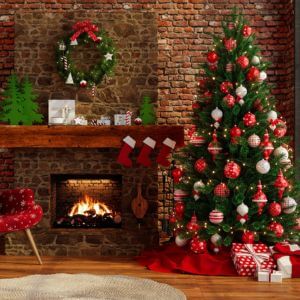
Nothing says the holidays quite like a well-decorated Christmas tree. But who knew there would be so many decisions before selecting the right tree? Do you prefer real or artificial? Pint-sized or full-sized? Fir, spruce, pine or balsam? White, green, silver or pink?
There’s a lot to consider before bringing one home and even more to know once it’s there, such as fire prevention, proper care instructions, how to keep pets safe and of course…how to decorate it! This list of tips will help keep you celebrating all holiday season long.
- What Size? – It’s tempting to bring home the biggest, fullest tree but that can backfire! Trees are generally available from 5 feet to 9 feet or even greater in height, so before you head to the tree lot or the store, measure from floor to ceiling and the width of the available space to avoid any surprises. Don’t forget to leave room for the star on top! If you need help with making a smaller room conducive to holiday decorations or entertaining, check out these tips for Making the Most of Small Living Spaces.
- What Type? – Have you ever wandered onto the tree lot and felt overwhelmed by how many varieties there are to choose from? Does one lose its needles quicker? Does one smell more aromatic? Know before you go to avoid looking up answers on your phone while standing in the cold with your family. Visit the National Christmas Tree Association website for the most concise list including features for each.
If it’s an artificial tree you’re after, consider a standard green unlit tree, a pre-lit tree or one which the colors can be changed and controlled from an app on your phone. If you’re looking for something outside the traditional selection, there are multiple colors to choose from including red, white, pink, lime green, purple, navy blue, silver and more!
- Decorating – No matter the size of your tree, there’s a smarter way to decorate it. For example, if your tree is against a wall, you don’t have to put lights or ornaments on the back. Here are a few more helpful tips:
- Don’t forget to use fire-safe ornaments and low heat lights (see the fire hazard prevention tips below).
- Artificial trees should be fluffed by separating and arranging the branches to give the tree volume and better shape.
- For a well-lit tree, use around 100 lights per foot. Try stringing the lights vertically instead of horizontally. Start at the bottom, move to the top and go in and out as you go up. Then, just bring the strand of lights down again, repeating this method.
- Buy a tree skirt that is wider than the widest part of your tree. It will catch fallen needles, protect floors and provide more space for presents.
- Use a smart plug to schedule the lights on your tree. This is much more convenient than reaching for a switch hidden by branches every day.
- Real Trees Need Water – Did you know that when a Christmas tree is cut, more than half its weight is water? If you’d like to keep your tree vibrant, soft and lush all season long, then use a stand with an adequate water reservoir and be sure to keep a sufficient amount of water in it. Follow these care instructions and you’re guaranteed to have a fresh tree. If you don’t, it can dry out and become a serious fire hazard.
- Fire Hazard Prevention – Whether you have a real or artificial tree, be aware of possible fire hazards and if you don’t already have smoke alarms installed, get them. For other great tips, check out our Fire Safety 101
- 2/3 of Christmas tree fires are natural trees and most are caused by electrical distribution or lighting within the tree. Use fire-safe lights that produce low heat and use surge protectors. Don’t overload electrical circuits. Always turn off tree lights before leaving the house or going to bed.
- Fires can occur if the tree is placed too near a heat source, such as a candle, fireplace or space heater. Place your tree in an open area with at least three feet of space around it.
- If you purchase an artificial tree, look for the fire-resistant kind.
- Pets & Children Safety – Did you know that most real Christmas trees are mildly toxic? We don’t anticipate that you’ll intentionally eat your tree, but pets and small children put almost everything into their mouths. In addition to being mildly toxic, most tree needles are sharp and can cause internal punctures or irritation. Not only are the needles a concern, but the tree water may contain fertilizer, bacteria or mold and can also catch the toxic oils and needles from the tree. Trees aren’t the only concern. Mistletoe, poinsettias, holly and Christmas cacti are dangerous to pets and children too. Read this for other tips on Pet Proofing Your Home.
- How to Dispose of a Real Tree – Many counties have free drop-off locations which you can take up to two trees to at no charge, but if you are looking for alternative ways to dispose of your tree and get benefit from it at the same time, check out these How To Recycle Your Tree
We hope you learned some practical tips that will help you select the perfect Christmas tree and keep your home and family safe. Check out our Holiday Safety Tips for more information and we hope you have a wonderful holiday season!
Share This:-
Holiday Theft
 Find Out
Now that your tree is ready, you can begin placing some of those presents under it. Do your shopping habits leave you open to theft?
-
Handling the Holiday Season
 See How
The holidays can be very stressful but with a little help, you can manage your stress and time to minimize being overwhelmed.
-
Holiday Spending Hangover
 Start Recovery
Were you a little too holly jolly and overspent this holiday season? You’re not alone. It’s easy to overindulge but these tips can help.