
What is a Gustnado?

If you’ve ever lived in the Midwest, you’ve probably heard of tornadoes. You might even know what to do if a tornado is in your area. But have you ever heard of a gustnado?
According to AccuWeather, a gustnado is a short-lived, ground-based swirling wind that can form on the leading edge of a severe thunderstorm. So, what’s the difference between a tornado and a gustnado?
Most tornadoes are formed from supercell thunderstorms, and they form above the ground. They are formed by a rotating updraft, which is what creates their familiar funnel shape. Gustnadoes are formed from non-supercell thunderstorms at ground level that don’t form a funnel. As easy way to distinguish them is gustnadoes are ground-based and tornadoes are cloud-based (actual clouds, not the cloud where your iPhone storage lives). Because gustnadoes are not cloud-based, they are difficult to predict, unlike tornadoes.
Damage: Tornadoes vs. Gustnadoes
Of the two, tornadoes can cause far more damage than gustnadoes. In fact, gustnadoes rarely get big enough to cause much damage at all; however, if a gustnado is strong enough, it can cause anything from power flashes like this one in Belton, Missouri to damage similar to what a weak tornado can cause. The damage a gustnado leaves is often referred to as straight-line wind damage, which might be a more familiar term.
If you are a Shelter customer and find yourself with damage after a storm, whether it’s a tornado or a gustnado, call 1-800-SHELTER (1-800-743-5837) or contact your agent.
Share This:-
What is THAT?
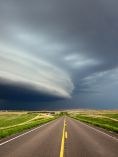 Get Details
If you ever see a wall of clouds that look similar to a UFO coming your way, take cover—it’s a derecho. We have details on derechos so you can understand them better.
-
Have a Plan
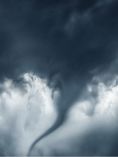 Make a Plan
Tornadoes are destructive, but they don’t have to be deadly. Here’s what to do if one is headed your way.
-
How to Recover
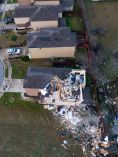 What to Expect
If your home is hit by a derecho or a tornado, it’s good to be familiar with our catastrophe claims process.